Under-Bed Storage Done Well: Practical Principles and Small Examples
Problem: Why under-bed storage often feels like a mess
Under-bed space is tempting because it’s out of sight and usually wide and shallow—a perfect match for many household items. Yet it commonly becomes a tangle of long-forgotten boxes, dust-covered linens, and heavy things that make sliding drawers awkward or damage the bed frame. The real issues are not the space itself but how we treat it: items get stored without a plan for access, protection, or load distribution. When that happens, the cost of retrieval (digging through, coughing, dragging heavy boxes) outweighs the benefit of the saved floor space.
Principles: Four simple rules that make under-bed storage work
1. Measure and match
Start with a tape measure. Note the height from floor to bed slat, the usable length and width between supports, and any clearance lost to bed skirts or rails. Choose containers that slide smoothly into that exact envelope. Containers that are too tall or too long create dead space and push other storage into awkward positions.
2. Prioritize based on access frequency
Keep frequently used items in easily accessible, shallow trays or rolling drawers placed near the bed’s center or the side you use most. Reserve deeper boxes for seasonal or seldom-used items. A simple access rule: if you reach for it more than once a month, it shouldn’t be at the very back under the bed.
3. Protect against dust and moisture
Choose breathable or sealed containers depending on the item. Cotton sheets and wool sweaters prefer breathable fabric bins that prevent mustiness; paper, photos, or delicate textiles often need acid-free sleeves and a sealed plastic tote. Elevate boxes slightly on small risers or use containers with built-in feet to reduce direct contact with potentially cooler, damper floor areas.
4. Balance weight and preserve structure
Distribute weight evenly across multiple containers rather than piling everything into one heavy box. Very heavy items (a stack of books, a full set of winter boots) are usually better stored elsewhere or split between boxes to avoid stressing bed slats. If your bed has thin slats, use a wider, low-profile base (like a plywood board between slats and containers) to spread the load.
Examples: Small, concrete setups you can copy
Example A — Weekly-Access Essentials
- Container: 4-inch-high rolling under-bed tray with a lid and recessed handle.
- Use for: slippers, bedside blanket, medication case, extra pillowcase.
- Placement: nearest side of the bed you exit most often so you can slide it out without bending deeply.
- Why it works: shallow depth matches weekly-access frequency and the roll-out motion keeps retrieval easy.
Example B — Seasonal Clothing Rotation
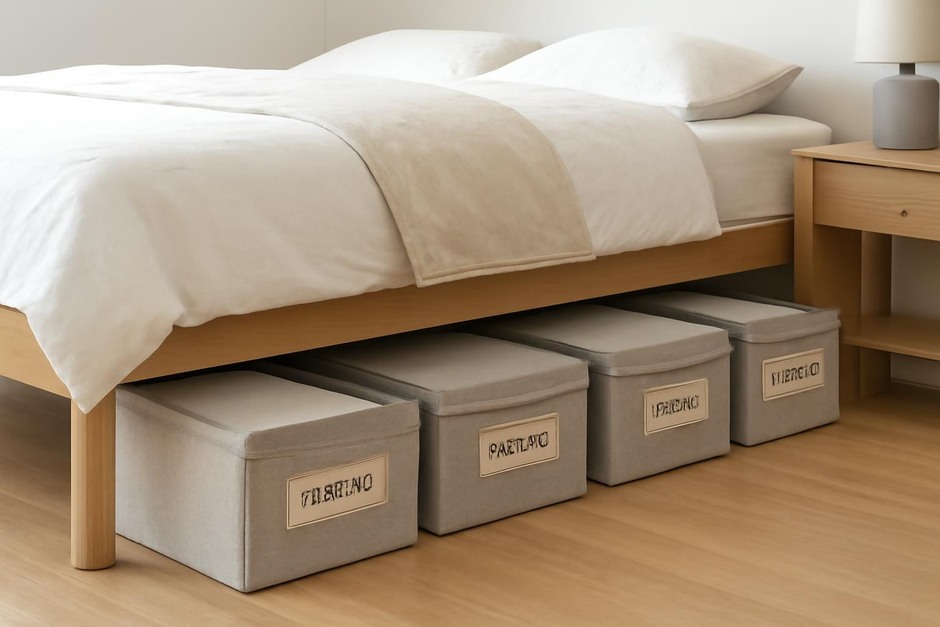
- Container: 10–12-inch fabric bin with zipper closure and breathable mesh panels.
- Use for: folded sweaters, scarves, and a small vacuum-seal pouch for bulkier coats.
- Placement: under the far end of the bed, grouped by season and labeled on the short edge for quick identification.
- Why it works: breathable fabric avoids the compressed-sweater smell while the zipper keeps dust out.
Example C — Copypaper and Papers That Still Need Attention
- Container: two shallow, stackable plastic document boxes with lids.
- Use for: current receipts, catalogs to review, or completed forms awaiting filing.
- Placement: near the side you sit on when handling paperwork so you can slide one box out at a time.
- Why it works: shallow boxes prevent a paper avalanche and make it obvious what requires action.
Practice checklist: quick actions to try this weekend
- Measure clearances under your bed: height, length, and width.
- Empty the under‑bed area and sort items into Keep, Donate, Trash, and Relocate piles.
- Choose containers sized to your measurements—aim for a mix of one shallow tray and one or two deeper bins.
- Label each container on the short edge so you can read it when it’s slid in place.
- Place frequently used items in the shallow tray; seasonal or infrequent items in deeper bins.
- Distribute heavy items across multiple containers and, if needed, add a thin board to spread weight across slats.
- Wipe or vacuum the cleared area before replacing containers and allow airflow for 24 hours if possible.
- Schedule a 10‑minute monthly check: remove one box, scan contents, and act on any items you still haven’t used.
Under-bed storage becomes useful the moment it’s organized for retrieval and care rather than for hiding. With a few measurements, thoughtfully chosen containers, and a short monthly check, that neglected space can become a calm, practical extension of your bedroom storage.